Environment | Paleo Trail BC
The Fernie area has a unique geological history shaped by ancient seas, mountain formation, and tectonic plate collisions. The rocks here were deposited in three main stages: First, very old sediments from the Helikian to Triassic periods built up along the continental margin. Then, Jurassic and Cretaceous sediments were carried eastward into a deep basin. Finally, younger Tertiary sediments formed along the Rocky Mountain Trench and Flathead Valley. Much of this history is recorded in the Fernie Basin, a large fold-and-thrust structure made mostly of Mesozoic rocks.
Two key formations here are the Fernie Formation, which consists of dark shales, sandstones, and limestones laid down in shallow Jurassic seas, and the coal-bearing Kootenay Formation that lies above it. The Fernie Formation varies in thickness depending on location and deformation. It rests on older Triassic or Paleozoic rocks and is overlain by the Morrissey Formation. Changes in rock type and heavy folding made mining very difficult and in the late 1800s, miners faced dangers like sudden outbursts and collapses underground. Today, most coal comes from large open-pit mines.
One unusual aspect of Fernie’s geology is that the mountains are "upside down." Typically, sedimentary rocks form in layers with the oldest at the bottom and the youngest at the top. In Fernie, older rocks are found above younger ones. This happened because of tectonic collisions. Hundreds of millions of years ago, Fernie lay near the equator under a warm, shallow sea. Later, the Pacific Plate collided with North America, buckling the land like a car fender in a crash. Segments of the ocean floor and volcanic island chains were pushed inland, creating swamps and shallow seas. Mud and vegetation built up in these basins and eventually turned into shale and coal. Enormous pressure from the collision folded and fractured the rocks, pushing older limestone beds up and over younger formations along thrust faults. This is why today Fernie’s mountain peaks contain ancient marine rocks while younger coal-bearing rocks lie beneath. This process took millions and millions of years, but that’s how nature builds mountains – with lots of time, and a little push.
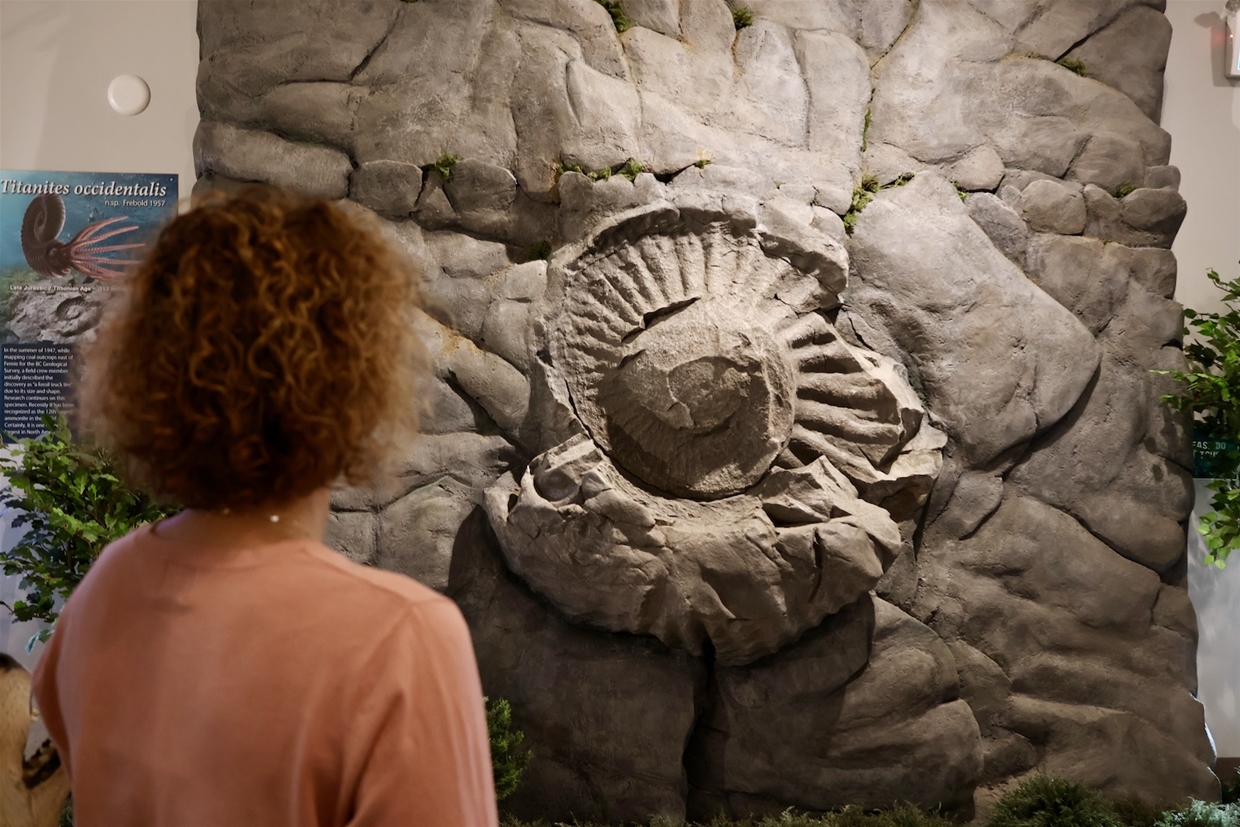
The seabed of the huge inland sea that spanned the majority of the province from southern Saskatchewan and Manitoba to Montana north through central British Columbia was previously made up of the rocks found here. The subtropical sea was home to marine life like ichthyosaurs and ammonites between 200 and 145 million years ago during the Jurassic period. The Fernie area, famous for its rich fossil history, provides a detailed record of ecosystems that existed here for hundreds of millions of years. Today, the mountains, coal seams, and fossils of Fernie are lasting evidence of a long and dramatic geological history.
Paleo Trails BC brings this unique and fascinating history to life through a series of interpretive tours and displays, and interactive online content, combining education storytelling and tourism to showcase the remarkable fossil discoveries found in our part of the Kootenays.
For more information, visit paleotrailbc.com or drop by the Sparwood Museum, Cranbrook Museum, or Fernie Visitor Information Centre.

Featured: Featured Author | Kelly Siskind
Kelly Siskind is a contemporary romance and rom-com author dedicated to all things happily ever after.
Learn More